Category: Market Insights & Trading
Liquidity Pools Explained: How They Work in DeFi
· 5 MIN READ
Learn how liquidity pools enable DeFi trading, how providers earn rewards, and the key risks to understand before joining a liquidity pool.
Liquidity Pools Explained
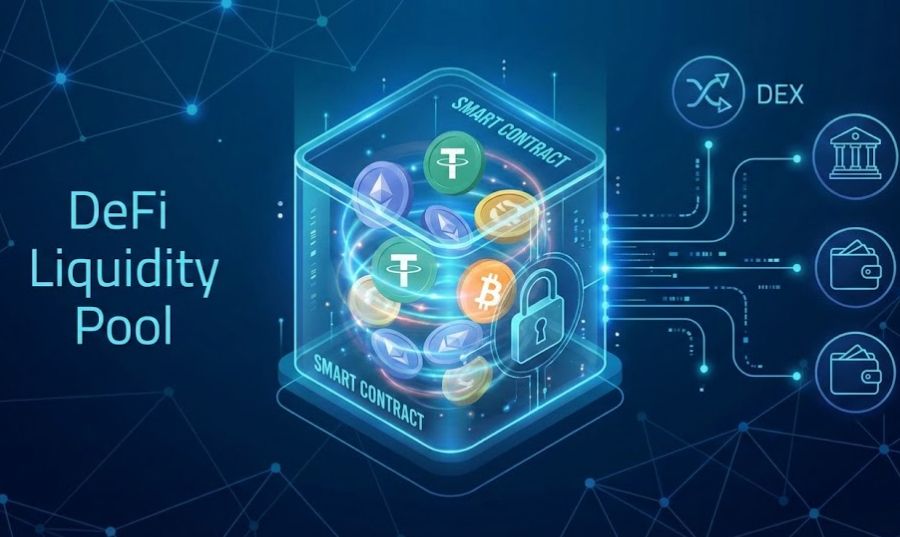
The topic of liquidity pools explained serves as a great entry point into modern decentralized finance. Liquidity pools are simply smart contracts that hold digital assets for peer-to-peer trading. Many users ask how liquidity pools in DeFi actually function. The short answer is: users lock their assets in these smart contracts and earn trading fees in return. This mechanism has replaced traditional order books, drastically increasing transaction speeds.
Understanding crypto liquidity pools helps you find new income streams. If you want to know how liquidity pools work and what risks they carry, this guide covers all the details to help you make better financial decisions.
Why Liquidity Pools Are Important
Without these pools, most decentralized financial services would fail to operate. In conventional markets, buyers and sellers must agree on a specific price simultaneously. This matching process often slows down trades and lowers overall trading volume. Fortunately, liquidity pools in DeFi solve this problem completely. You can trade your assets at any time of day or night without needing a counterparty. The concept of liquidity pools explained shows us how the reliance on centralized entities has diminished.
These pools provide the necessary capital for trading platforms, allowing individuals and businesses to scale their projects. The main benefits include:
- Facilitating trades without requiring approval from central authorities, cutting down wait times.
- Creating income-generating opportunities for all active participants in the space.
- Supplying continuous capital that prevents sudden volatility drops on exchanges.
How Liquidity Pools Work
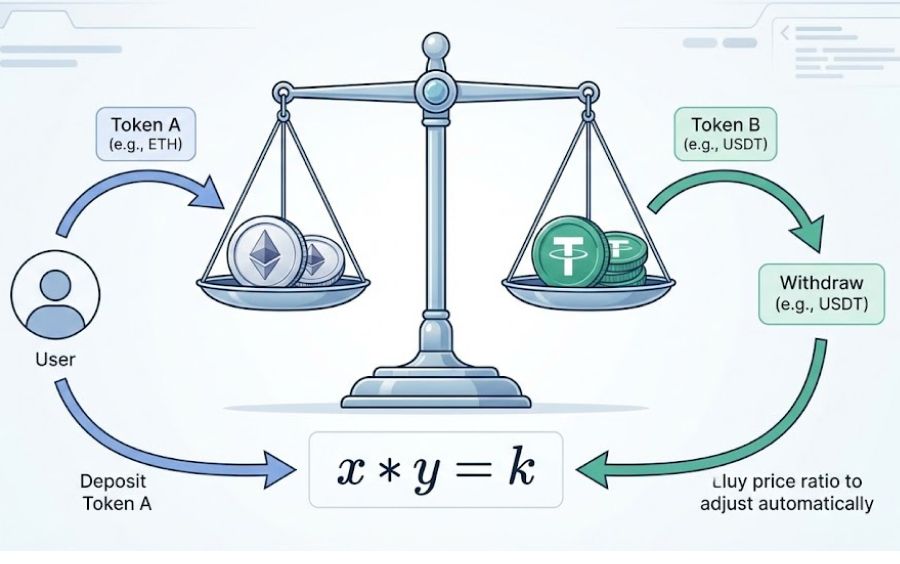
These systems rely entirely on automated market makers. If you are wondering how liquidity pools work, prices are determined by a mathematical formula rather than user-submitted orders. When someone wants to buy a token, they take it from the pool and replace it with another token. This shift in the asset ratio automatically adjusts the prices. Searching for liquidity pools explained proves that this mechanism requires no human oversight; smart contracts handle the balancing act.
Along this path, the GIDEX decentralized exchange operates as a non-custodial, KYC-free trading platform utilizing an Omni chain infrastructure. Through its Omni chain liquidity and settlement layer, GIDEX provides the necessary capital for cross-chain swaps. The Omni chain based trading engine within this ecosystem allows users to seamlessly trade real-world assets (RWA). Utilizing crypto liquidity pools within these architectures guarantees extremely high liquidity.
The Role of Liquidity Providers
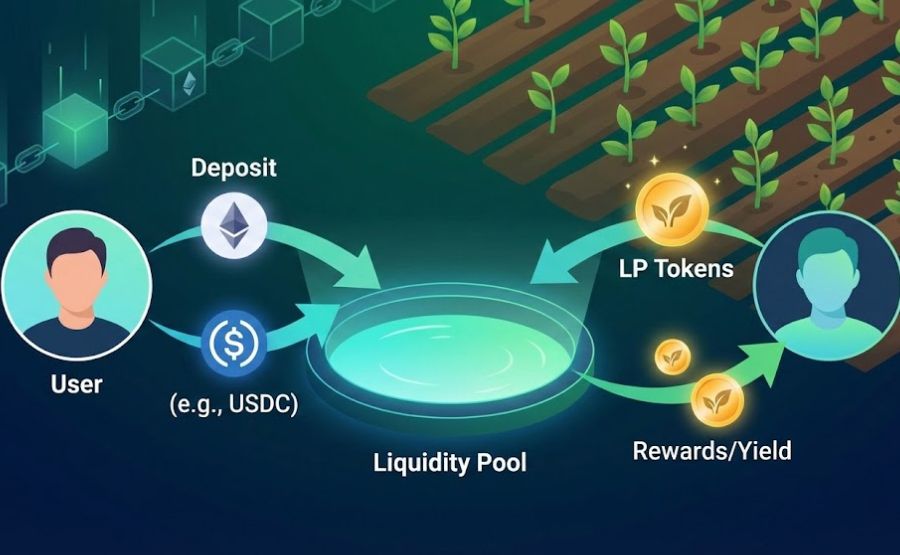
Liquidity providers are the users who lock their trading pairs inside smart contracts. Their presence heavily supports network stability. In crypto liquidity pools, these individuals act as the main pillars of the market. In exchange for the capital they provide, they receive specialized LP tokens. These tokens represent their exact share of the total pool. Studying liquidity pools explained clearly shows that without these participants, the automated market maker mechanism would halt.
Every time a trade executes on the network, a percentage of the fee goes directly into the pool. These fees are then distributed among providers based on their respective shares. The operational flow of liquidity pools in DeFi is designed so retail users can also earn income from trading fees. This incentive structure encourages more people to bring their assets to the network, resulting in smoother trading volumes and more stable prices. A thorough look at liquidity pools explained teaches us that this return is sustainable.
Risks and Impermanent Loss
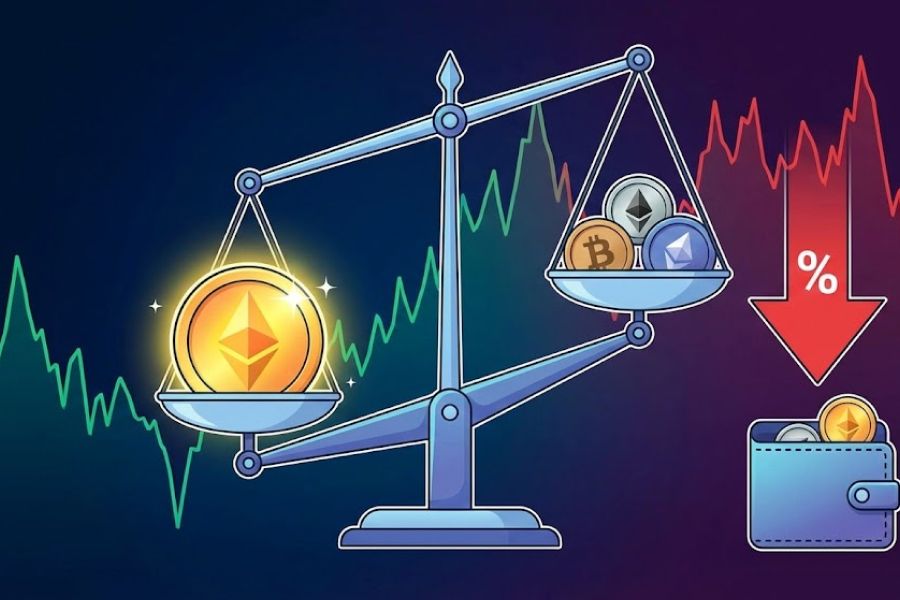
Participating in these environments carries specific risks, the most prominent being impermanent loss. This loss occurs when the price of the locked assets changes compared to the time of deposit. If a token's price surges, the automated market maker formula adjusts the asset ratio to maintain balance. If the user withdraws their capital at that moment, the total fiat value might be lower than if they had simply held the tokens in a wallet. In the discussion of liquidity pools explained, we see that severe market fluctuations increase the risk of providing capital.
Besides price volatility, coding issues must be evaluated. Bugs within smart contracts can lead to the loss of locked funds. Understanding how liquidity pools work reminds us that malicious actors constantly look for security vulnerabilities in these protocols. Therefore, selecting projects with reputable security audits is a necessity. Users must assess market conditions before locking up their assets.
Liquidity Pools vs Traditional Order Books
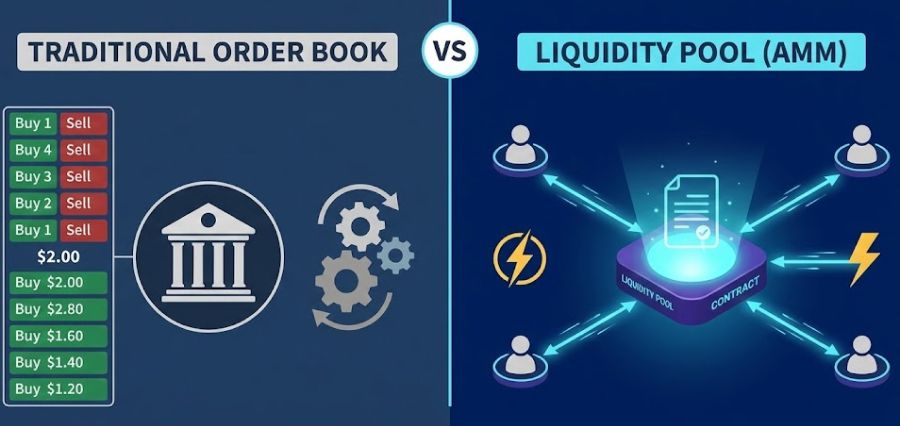
The difference between these two methods lies in the matching process. In order books, prices are dictated by the requests submitted by users. If no buyer matches your asking price, the trade will not execute. However, liquidity pools do not need a direct counterparty. If you read articles covering liquidity pools explained, you will notice that the smart contract acts as the intermediary, setting the price based on real-time inventory.
This structural difference makes crypto liquidity pools much faster. In traditional systems, the gap between the bid and ask prices causes delays. The table below outlines the primary differences:
| Feature Evaluated | Liquidity Pools | Traditional Order Books |
|---|---|---|
| Trading Process | Managed by a smart contract | Requires direct user matching |
| Intermediary | Not required | Often depends on centralized platforms |
| Price Determination | Based on mathematical formulas and inventory | Based on submitted user requests |
| Execution Time | Very fast with zero delays | Dependent on counterparty presence |
What to Know Before Joining a Liquidity Pool
Before injecting your assets, you should evaluate a few factors. First, identify reputable platforms that have passed security audits. A solid grasp of liquidity pools explained helps you select networks with higher capital volume, as smaller pools suffer from severe price swings. You also need to review the return on investment and the fee structures to ensure the network is profitable.
Within liquidity pools in DeFi, different platforms offer varying pool structures. Some of them pay out their governance tokens as an extra reward. Knowing how liquidity pools work teaches you not to concentrate all your capital on a single trading pair. Diversifying your assets lowers the risk of harsh market movements. This table highlights the common types of pools:
| Pool Type | Brief Description & Use Case |
|---|---|
| Traditional Pair Pools | Standard model with a 50/50 ratio between two different assets |
| Stablecoin Pools | Designed for stable assets to mitigate price volatility |
| Multi-Asset Pools | Supports several tokens simultaneously with variable weightings |
| Single-Sided Pools | Allows depositing just one asset to reduce price change exposure |
Final Thoughts
The mechanism behind liquidity pools explained forms a solid foundation for the expanding digital economy. By removing conventional barriers, these pools enable fast, cheap, and transparent trading. Familiarity with the potential of liquidity pools alongside the concepts of crypto liquidity pools helps users leverage their idle assets for profit. While risks like market volatility exist, careful evaluation can manage these threats.
Frequently Asked Questions
- What are liquidity pools in simple terms?
The topic of liquidity pools explained shows that these are smart contracts holding tokens. These systems allow individuals to trade their assets without needing a direct buyer or seller, forming the backbone of decentralized finance.
- How do liquidity pools make money?
Users who place their assets in crypto liquidity pools earn a percentage of the fees from every transaction happening there. This return is calculated and paid entirely based on their share of the total pool volume.
- What is impermanent loss in liquidity pools?
This loss happens when the price of the coins inside the network shifts. If a token's price rises, the pool's formula adjusts it. Understanding how liquidity pools work proves that this event results in less profit upon withdrawal.
- Are liquidity pools safe for beginners?
Entering this sector requires knowledge. To gauge market risk, users can leverage the INTELLIGENT X tool within the GINOX ecosystem. This AI Signal Analyzer evaluates trade validity, risk levels, and market alignment, making decision-making safer.
- How do liquidity pools differ from order books?
Order books require direct matching between a buyer and a seller. In the new system, you trade directly with a smart contract. The lack of intermediaries in liquidity pools in DeFi ensures trades execute much faster without waiting periods.