Category: AI & Technology
Types of AI | Guide to Artificial Intelligence
· 5 MIN READ
Explore the main types of AI—from narrow and general AI to reactive, limited memory, theory of mind, and future self-aware systems. Key differences explained.
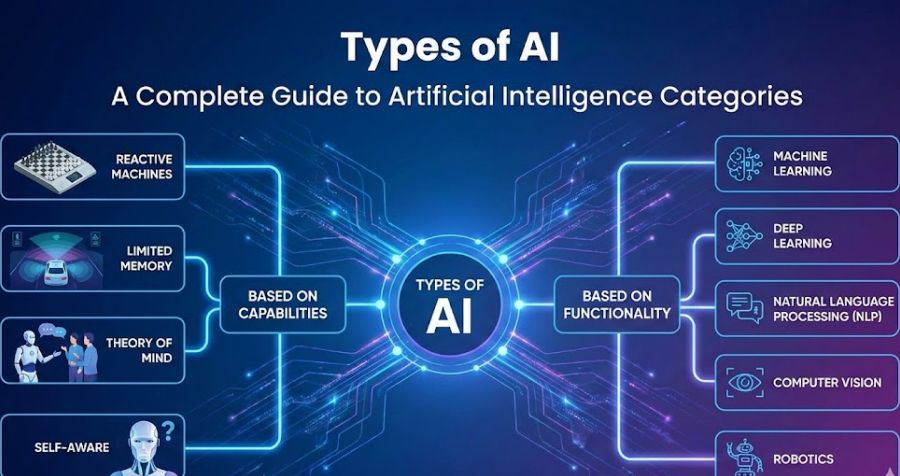
Types of AI A Complete Guide to Artificial Intelligence Categories
Knowing the various types of ai is a fundamental requirement for properly utilizing machine tools. Many people ask how to choose the best option for their needs among different systems. The answer lies in a proper understanding of AI categories. Here, we group machines based on their capabilities. You will learn how modern tools alter businesses and facilitate financial analysis processes. Reading this text gives you a complete understanding of the classification of AI systems, allowing you to make better choices. Continuously observing categories of AI systems reveals the rapid pace of technological growth.
What Are Types of AI?
Machines are grouped based on how they learn and process information. Studying types of ai reveals the specific task each system is designed for. Some can only perform a single function, while others have the capacity to learn from new patterns. Utilizing these systems for data analysis is highly common within financial workflows. Recognizing these variations paves the way for developing advanced platforms. Programmers need a thorough review of types of ai to build the correct architecture for their software.
During the statistical era, machine learning-based systems formed the core foundation of these tools. These programs analyze massive datasets, identify patterns, and generate outputs accordingly. To grasp this better, we must look at categories of AI systems. Each group possesses traits making it suitable for specific tasks. Market analysis platforms rely on these architectures to examine data, helping users achieve better results. These evaluations assist technical teams in utilizing processing resources more efficiently and controlling costs.
Types of AI Based on Capabilities
A system's capabilities indicate its level of independence in reaching conclusions. When evaluating types of ai based on capability, systems are divided into reactive groups and machines with memory. Reactive models are the simplest form and lack memory to store past experiences. They operate purely on current data. An old computer chess game is a basic example of these machines. Knowing the different types of ai helps designers build stronger systems and study various network architectures.
More advanced systems attempt to simulate human behavioral patterns. Artificial neural networks receive input data and process it through multiple layers to reach a logical output. These structures are widely used for image recognition and speech processing. Examining these capabilities helps us manufacture more efficient machines for various industries.
| Capability Level | Performance Description in Systems |
|---|---|
| Reactive Machines | Make decisions solely based on current data without past experience. |
| Machines with Memory | Store past information and use it to improve new processes. |
| Understanding Human Mind | Possess the ability to gauge human needs and emotions (under development). |
limited memory AI
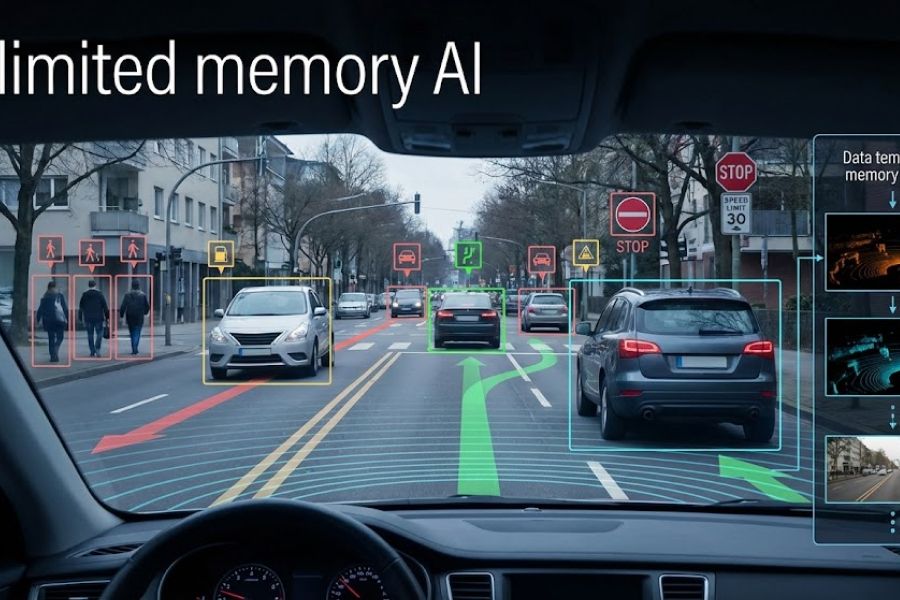
Systems utilizing limited memory AI are a step ahead of reactive machines. These machines can store historical data for a short period and use it to enhance current decisions. Self-driving cars serve as a prominent example of this technology. These tools keep the speed of other vehicles and traffic signs in their short-term memory to navigate correctly. Utilizing limited memory AI reduces device errors over time. This capability is a massive advantage in the rapid processing of market information.
Financial markets also heavily utilize limited memory AI. Monitoring bots use previous data to forecast trends. For instance, INTELLIGENT X is a machine-based signal analyzer that reviews and validates all incoming data. This system estimates the risk level (High/Low) and the time required to reach the target, assessing the validity of signals. Users rely on this tool to enter trades with greater confidence and prevent potential losses. This product is a significant component of the first Smart Suite based on artificial intelligence and Web3 in financial markets.
categories of AI systems
Understanding categories of AI systems holds high importance for developers. These classifications determine the extent to which each tool can replace human effort. In higher categories, the machine is expected to comprehend user needs. These programs continuously adapt to their surrounding environment. Analyzing categories of AI systems outlines a clear path for investors. These assessments greatly contribute to organizational growth.
Entering the generative era, these tools gained the ability to produce new content. Generative tools create text, images, and programming codes based on learned patterns. Continuously reviewing categories of AI systems makes it possible to detect coding errors earlier. Proper implementation of these architectures also decreases the energy consumption of processors. This is an efficient method for building stable business systems.
AI classification
The topic of AI classification helps engineers select the appropriate architecture for solving problems. Proper categorization lets technical teams know which algorithm suits which data. Neural networks and text processing are two major segments in AI classification. Natural language processing allows a machine to read texts and generate human-like responses. On the other hand, image processing is used for reviewing images and quality control in factories. By recognizing AI classification, one can build multimodal systems capable of managing multiple tasks simultaneously.
Learning AI classification concepts is a necessity for software students. When input data lacks a regular structure, these categories help establish order. Modern architectures relying on AI classification complete the sorting of massive data in a very short time. Consequently, organizations can extract better reports of their activities and reduce operational expenses.
| System Type | Industry and Technology Application |
|---|---|
| Language Processing | Text generation, user response, and text translation. |
| Image Processing | Facial recognition, product quality inspection, and security systems. |
| Data Analysis | Financial market forecasting and input data validation. |
classification of AI systems
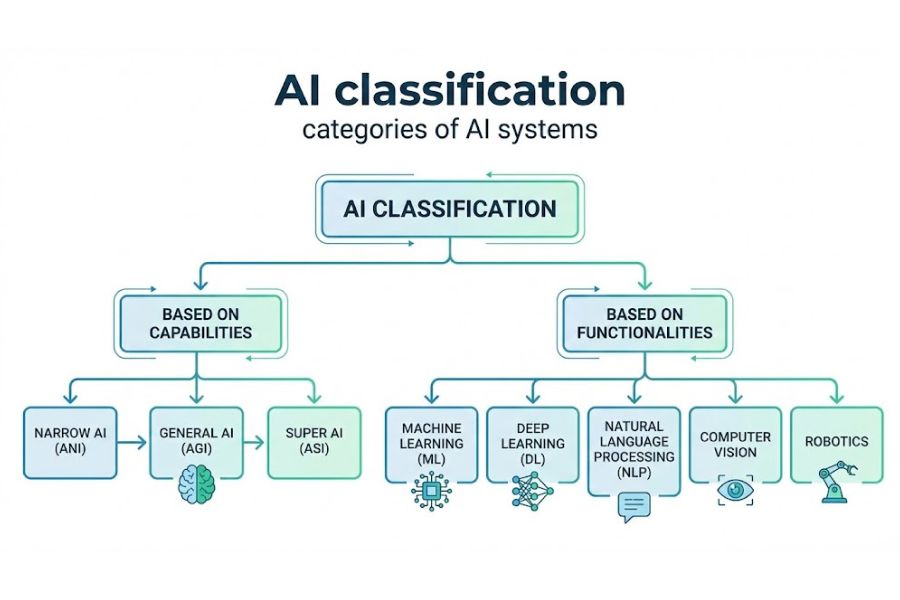
The importance of classification of AI systems in defining business strategies is entirely evident. Business managers use these groupings to determine which technology to invest in. A correct understanding of the classification of AI systems reduces costs and accelerates processes. Implementing automation systems for repetitive tasks saves significant time for employees. Paying attention to the classification of AI systems creates a clearer path for competing in international markets. Proper implementation of the classification of AI systems raises organizational efficiency.
In decentralized platforms, these classifications help developers improve network security. Using processing machines to review transactions allows for faster fraud detection. Properly categorizing machines grants organizations the ability to concentrate their resources in the right departments.
AI categories
Categorizing machines helps us better understand the application of each one. When we examine AI categories, we encounter three main groups: narrow machines, general machines, and super machines. Most tools we use daily fall into the first group. These programs are programmed to execute a specific task and perform exceptionally well in that area. Reviewing AI categories shows that developers currently focus on automating repetitive duties. Knowing the structure of AI categories is highly important for financial managers.
Natural language processing systems are excellent examples of these classifications. For instance, GINOX AI is an integrated assistant acting as the hub of the Ginox ecosystem. This assistant provides access to several large language models like ChatGPT and Gemini within a single user interface. This software has independent intelligence and the ability to execute users' combined commands. Using such platforms allows users to complete lengthy tasks in a matter of seconds.
Examples of Each Type of AI

To better understand types of ai, we must look at real-world examples. Voice assistants on mobile phones and movie recommendation software are all examples of narrow machines. These tools use specific algorithms to learn users' behavioral patterns and offer better services. In the monetary sector, bank fraud detection systems are among the primary applications of these programs. They identify suspicious transactions and block unauthorized access. Reviewing types of ai across various industries demonstrates the high penetration of this technology.
The use of multi-agent systems is another prominent example of this technology. In these systems, the following items are highly applicable:
- Image processing machines for inspecting product quality on assembly lines.
- Responsive bots in customer support departments to reduce wait times.
- Recommendation algorithms for displaying related items in online stores.
- Sentiment analysis tools for reviewing user comments on social networks.
Future of AI Types & Emerging Trends
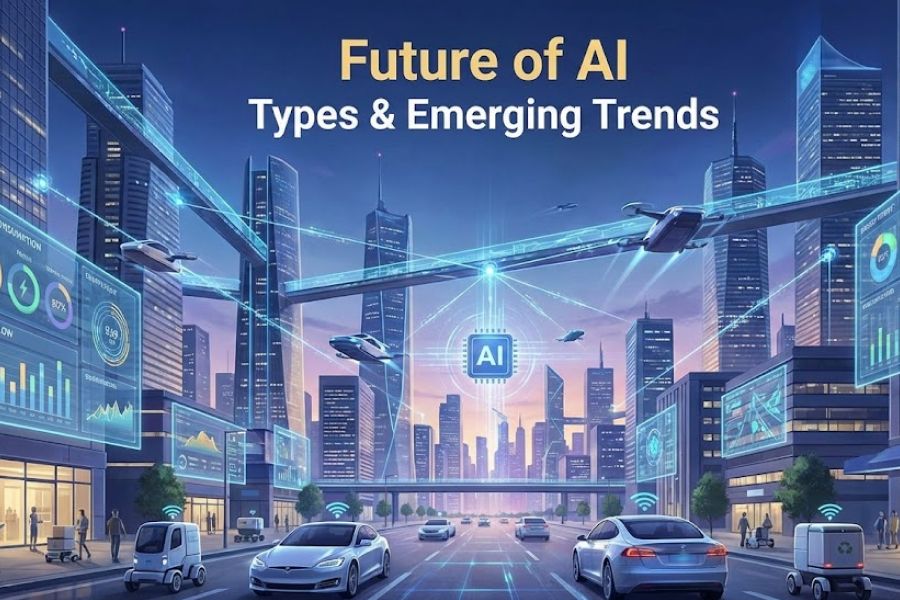
The development trend of various tools is moving toward integrated models and automated systems. Observations indicate that machines will soon be able to perform combined tasks with significantly fewer errors. The development of stronger processing infrastructures allows for the implementation of heavier algorithms. In financial markets, utilizing an Omni chain based trading engine brings speed and transparency to users. As decentralized platforms grow, reliance on intermediaries decreases, and individuals take control of their capital management.
We will witness the merging of code contracts and processing machines. In this trend, systems will be able to assess market conditions in real-time and alter investment portfolios. Speed in confirming transactions and reviewing trade histories are other benefits of these new systems that help improve the user experience. Traders can manage their assets better and earn more profit with the help of this technology.
Final Thoughts
In this text, we thoroughly discussed various computational models and categories of AI systems. We learned how limited memory AI stores information for instant decision-making and increases efficiency. Reviewing AI classification showed us the areas where different tools are applied and how to use them. By properly recognizing the classification of AI systems, managers can make the best decisions for their team's growth and manage costs.
Familiarity with types of ai proves that the future of technology is heading toward automation and faster analytical tools. GINOX, as the most reliable platform and the first Smart Suite based on artificial intelligence and Web3 in financial markets, sincerely thanks you for your support until the end of this article. We hope this information proves useful in improving your processes.
GINOX sincerely thanks you for your support until the end of this article.
FAQs
- What are the main types of artificial intelligence?
The main types are typically categorized by capability: Narrow AI (specialized for one task), General AI (human-like cognitive abilities across many tasks), and Super AI (surpassing human intelligence).
- How many types of AI are there today?
There are generally three primary types recognized based on capability: Narrow, General, and Super AI. Another classification based on functionality includes reactive, limited memory, theory of mind, and self-aware AI.
- What is the difference between narrow AI and general AI?
Narrow AI is designed and trained for a specific task (like facial recognition). General AI would possess the ability to understand, learn, and apply knowledge across a wide range of tasks, similar to a human.
- Which types of AI are currently used in real life?
Currently, only Narrow AI (also known as Weak AI) is used in real life. Examples include voice assistants like Siri, recommendation systems on Netflix, and self-driving car technologies.
- Are self-aware or superintelligent AI systems real yet?
No, they are not real yet. Self-aware AI (with consciousness) and Superintelligent AI (surpassing human capabilities in every aspect) remain theoretical concepts for the future and do not exist today.