Category: Market Insights & Trading
What Is a Cross-Chain Swap? How It Works in Crypto
· 5 MIN READ
Learn what a cross-chain swap is, how it transfers tokens between blockchains, and the key risks to understand before using cross-chain DeFi platforms safely.
What Is a Cross-Chain Swap?
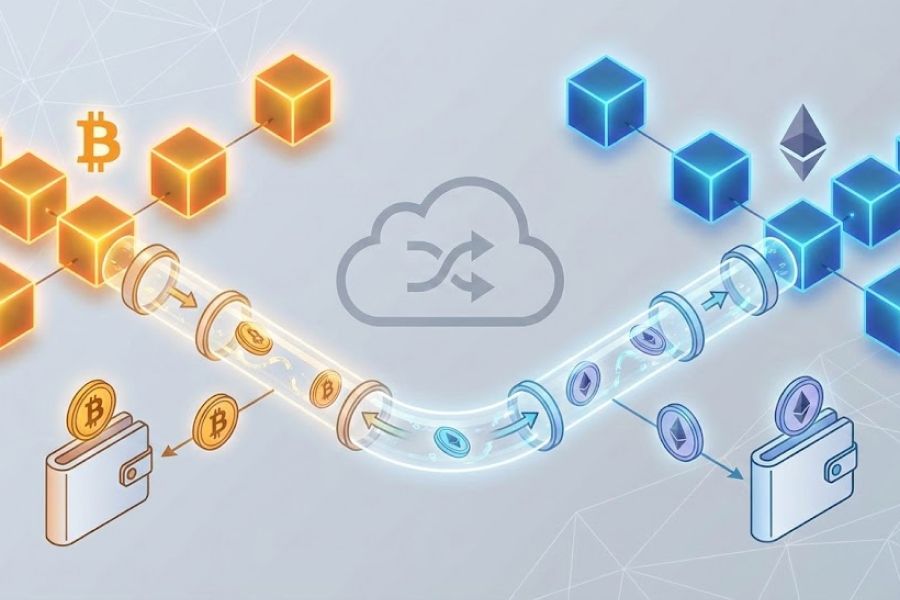
Have you ever wanted to trade Bitcoin for Ethereum without relying on a middleman? When people ask what is a crosschain swap they are looking for a way to exchange assets directly between isolated networks. Traders no longer have to move funds to centralized exchanges just to complete a basic conversion. You send the source token and receive the target token right in your wallet. This approach speeds up transactions and removes friction. The decentralized economy relies on these systems to build a more connected financial environment.
Understanding Cross-Chain Swaps in Crypto
The concept of cross chain swap crypto refers to trading digital assets directly between separate networks. Blockchains operate like isolated islands with no natural way to communicate. We need secure pathways to transfer value across these gaps. This technology provides that exact route.
Users keep full control over their funds. There are no lengthy registration forms or identity verification steps. Smart contracts handle the entire process and guarantee the exchange. If someone fails to meet their end of the bargain, the contract cancels the trade and returns the funds to the original owners. This security layer gives traders the confidence to move their capital freely.
Why Cross-Chain Swaps Are Needed
Modern financial markets demand speed and unrestricted access. Waiting days for a centralized exchange to approve a withdrawal means missing out on fast-moving investment opportunities. The need for instant conversion has made these decentralized solutions highly popular.
Keeping assets out of centralized control is another major factor. Handing your capital over to a third-party platform means you lose ownership. Recent market events have shown that trusting centralized entities carries massive risks. Direct swapping ensures your funds stay in your personal wallet, safe from exchange hacks or sudden account freezes.
How Cross-Chain Swaps Work
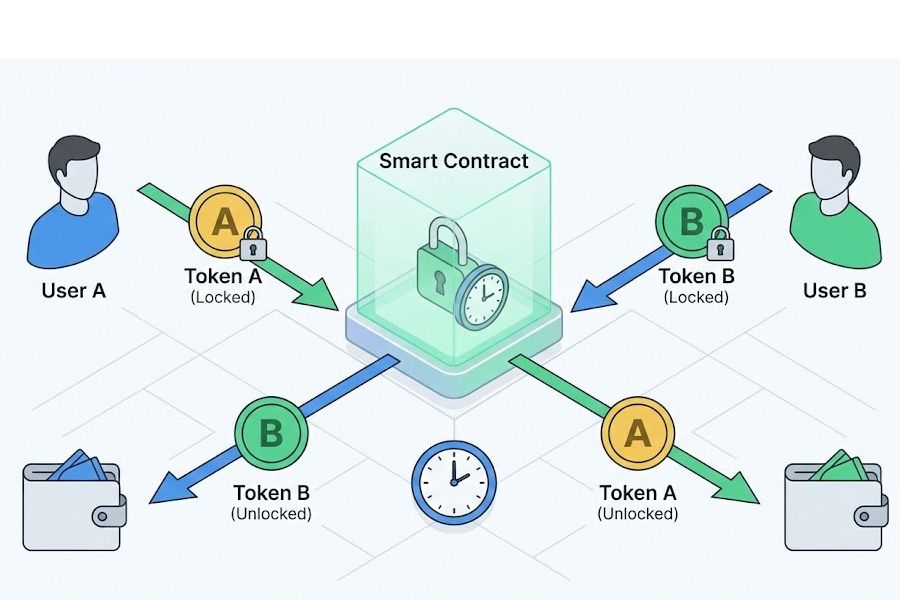
These trades rely heavily on time-locked contracts. Both participants lock a specific amount of crypto into the code. Once both deposits are confirmed, the contract executes and distributes the tokens to the respective wallets.
The system stops the process and refunds the money if either party fails to deposit on time. This prevents scams and bad actors from stealing funds. Liquidity providers also step in to speed things up. They build pools of different currencies so users can complete orders instantly without waiting for a specific trading partner to show up.
cross chain bridges vs swaps
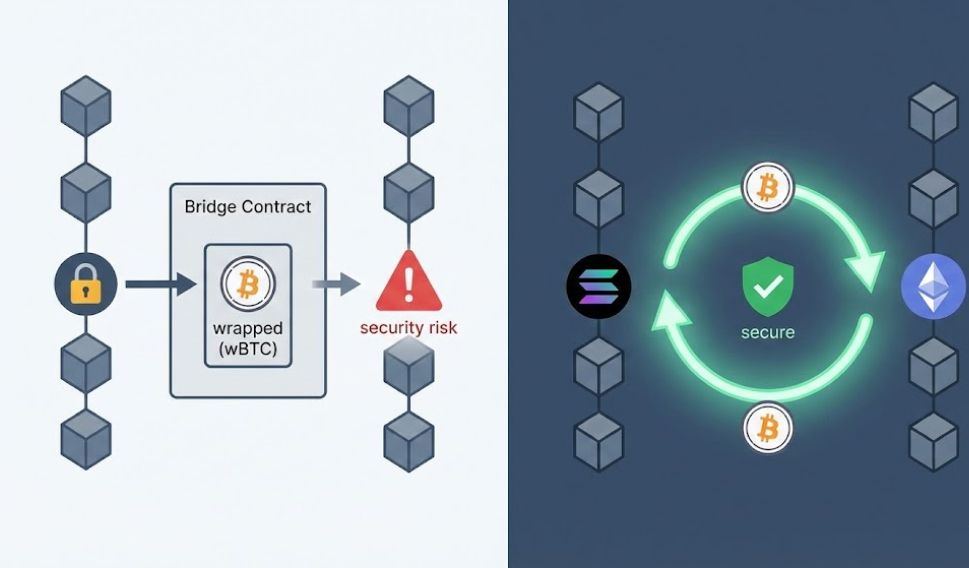
Understanding the distinction between bridges and direct exchanges helps traders protect their assets. Look at the table below for a clear comparison of cross chain bridges vs swaps.
| Feature | Blockchain Bridges | Direct Swaps |
|---|---|---|
| Asset Received | Wrapped or representative token | Native token on the destination network |
| Security Level | Carries central contract vulnerabilities | Highly secure and decentralized |
| Transaction Speed | Depends on network congestion | Fast and immediate execution |
Bridges lock your original asset and mint a representative version on the target network. This creates a honeypot for hackers, and bridge exploits are common. Direct exchanges bypass this problem entirely because you receive the actual native asset in your wallet.
blockchain cross chain swaps
The rise of blockchain cross chain swaps stands as a major technical achievement. Different networks can now interact without traditional financial middlemen. In the past, moving capital across networks meant paying heavy fees to centralized platforms.
Decentralized applications now process these transfers with minimal costs. This progress allows more people to participate in decentralized finance. Developers continuously optimize these protocols to speed up confirmation times and lower gas fees. The gap between isolated networks is shrinking rapidly.
crosschain liquidity
Having enough capital available is the backbone of these trading platforms. The term crosschain liquidity refers to the funds deposited in smart contracts to facilitate smooth trading. Fragmented capital across different networks causes severe price slippage for traders.
Aggregating this capital helps users move large volumes without experiencing sudden price drops. Investors who provide this capital earn a share of the trading fees, encouraging more people to fund the pools. Managing these pools properly ensures the platform remains stable and executes orders at the intended market price.
crosschain DeFi swaps
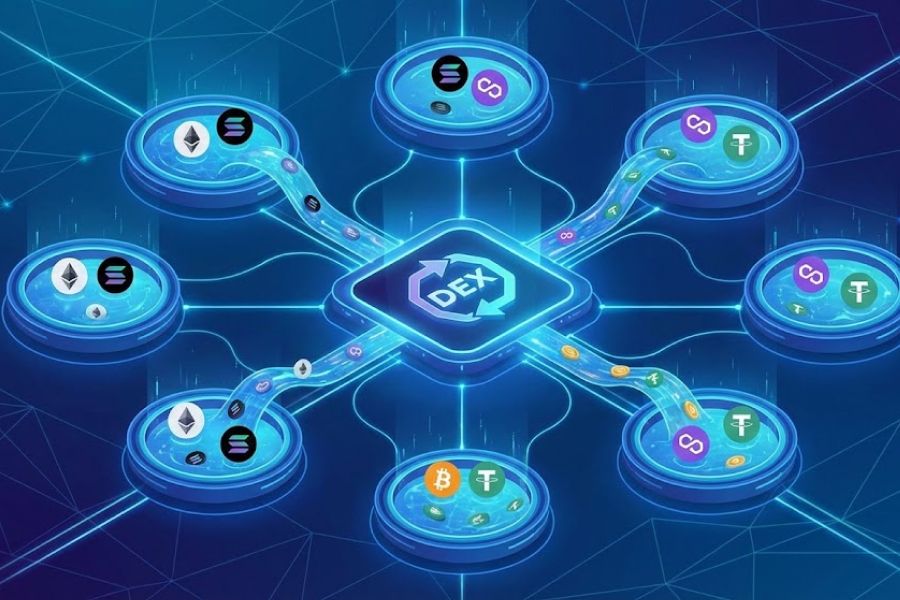
Decentralized finance is growing, and crosschain DeFi swaps are driving a large part of that expansion. Traders actively hunt for the highest yields across various networks. They need tools that exchange tokens seamlessly to capture these opportunities.
GIDEX is the Ginox decentralized exchange built to answer this exact demand. It facilitates spot and futures trading with zero KYC requirements. Operating as a native, fully decentralized trading platform built on Omni chain architecture, it features an Omni chain liquidity and settlement layer to secure the best rates. Users maintain total ownership of their capital without any corporate interference.
cross chain token swap
The user experience for a cross chain token swap is highly streamlined. You connect your wallet, select the assets, and click a button. Behind the scenes, multiple contracts communicate to find the most efficient path for your capital.
Aggregators scan the market to secure the best exchange rate. This process takes only seconds, but it is the result of years of engineering aimed at building an open financial system. The straightforward interface means even beginners can easily navigate the decentralized landscape.
Use Cases for Cross-Chain Swaps
This technology covers a wide range of practical applications. Imagine you want to join a blockchain game on Polygon, but your funds are parked on Ethereum. You can move your assets instantly to start playing.
Business owners use this infrastructure for borderless payments. If the Solana network offers better staking yields, investors can shift their tokens there without friction. This mobility forces networks to compete and deliver better services to attract capital. International transfers and online purchases also benefit heavily from this setup.
Benefits of Cross-Chain Swaps
The advantages are substantial. The biggest draw is total ownership and security. You never have to trust a company with your money since computer code handles the logistics. The table below outlines other major benefits.
| Advantage | Description |
|---|---|
| Lower Costs | Removing middlemen cuts trading fees significantly |
| High Privacy | No identity verification or document uploads required |
| Censorship Resistance | No central authority can block your transactions |
Fast processing times improve the trading experience. Traditional finance might hold your money for days, but decentralized systems settle trades in minutes. Global, unrestricted access remains the greatest achievement of this technology.
The Future of Cross-Chain Interoperability
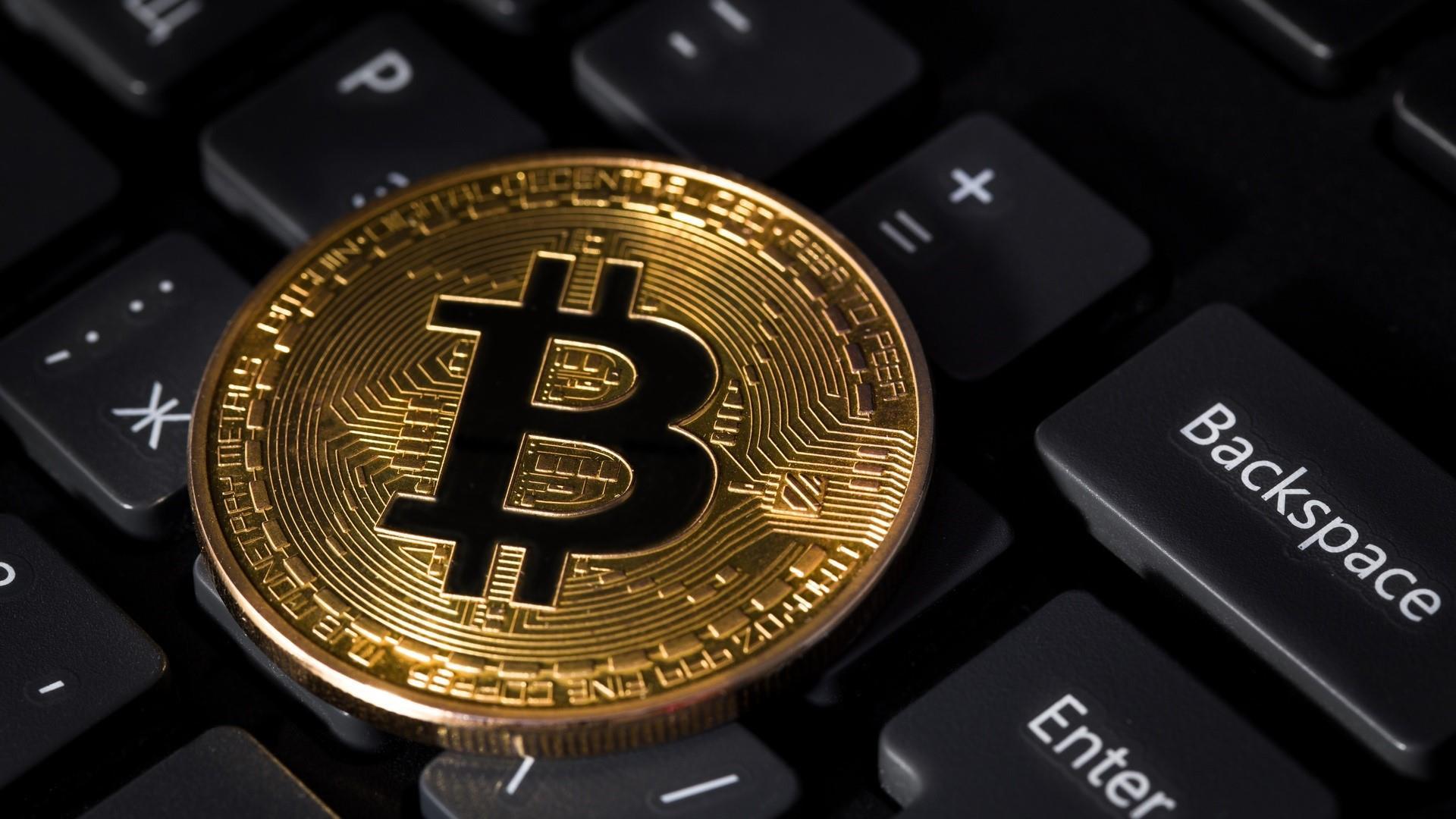
The trajectory of network communication points toward massive scale. Engineering teams are building protocols capable of handling thousands of transactions per second. Private institutional networks will soon interact securely with public blockchains.
Seamless communication will eventually erase the boundaries between different networks. Users in the near future will not even realize which blockchain they are using because the applications will manage the routing quietly in the background. Massive capital is currently funding this specific area of development.
Final Thoughts
We outlined how direct network exchanges function and why they are necessary for a healthy decentralized economy. These systems provide a fast, secure, and affordable way to move capital while giving control back to the actual owners.
By cutting out centralized exchanges, the risk of losing funds drops sharply. This technology is still maturing, and user interfaces will continue to improve alongside underlying security measures. We have answered the most common questions below to clear up any remaining confusion.
Frequently Asked Questions
- What is a cross-chain swap in crypto?
This refers to trading a token on one network directly for a token on another network. It removes the need for centralized exchanges and keeps your assets securely in your personal wallet throughout the process.
- How do cross-chain swaps work between blockchains?
The process uses time-locked smart contracts or unified liquidity pools. Users deposit their source token, and the protocol automatically sends the equivalent target token to their wallet from the destination network.
- Are cross-chain swaps the same as bridges?
No, they operate differently. Bridges lock your asset and issue a wrapped token, which carries a high risk of getting hacked. Direct exchanges deliver the actual native token of the destination network.
- What are the risks of cross-chain swaps?
The main risks include smart contract bugs or low liquidity causing poor exchange rates. Using tools like INTELLIGENT X on the Ginox platform works as an AI Signal Analyzer to evaluate the validity and risk level of your market entries before you commit capital.
- Why are cross-chain swaps important for DeFi?
These systems unite fragmented capital across different networks. Traders use them to find the best prices and yield opportunities without being restricted to a single blockchain environment.
GINOX is the first Smart Suite based on AI and Web3 in financial markets. We sincerely thank you for your support until the end of this article.