Category: Market Insights & Trading
What Is an Automated Market Maker (AMM)? Explained Simply
· 5 MIN READ
Discover how automated market makers power DeFi trading, set prices without order books, and what every trader should know before using an AMM protocol safely.
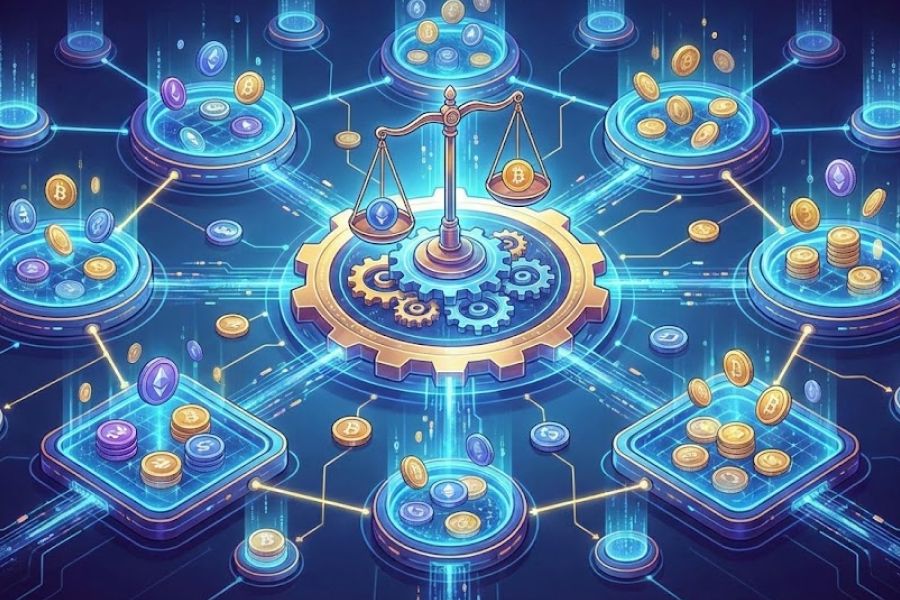
Are you trying to figure out what is an automated market maker and want to know how peer-to-peer trading happens without middlemen? An AMM is basically a software contract providing the liquidity needed for trades. You will not find traditional buyers and sellers here. People deposit their assets into pools, and mathematical formulas handle the transaction pricing. This framework forms the backbone of decentralized exchanges. We will break down how automated market makers work and explore concepts like the DEX automated market maker so you can navigate these platforms with ease. Grasping these mechanics helps you make better decisions and step into decentralized finance with open eyes.
What Is an Automated Market Maker (AMM)
An AMM framework lets users trade digital assets without an order book. Blockchain contracts step in to replace human brokers. You can swap tokens easily using liquidity pools. Participants fund these pools and, in return, earn a share of the trading fees. Knowing what is an automated market maker helps you understand the architecture of modern financial markets. These systems ensure liquidity is always available for trades, even if nobody is actively taking the other side of your order right then. This mechanism speeds up the market and supplies continuous capital. We are looking at essential factors here. In an automated market maker crypto ecosystem, everything runs transparently. The trader interacts directly with the smart contracts.
DEX automated market maker
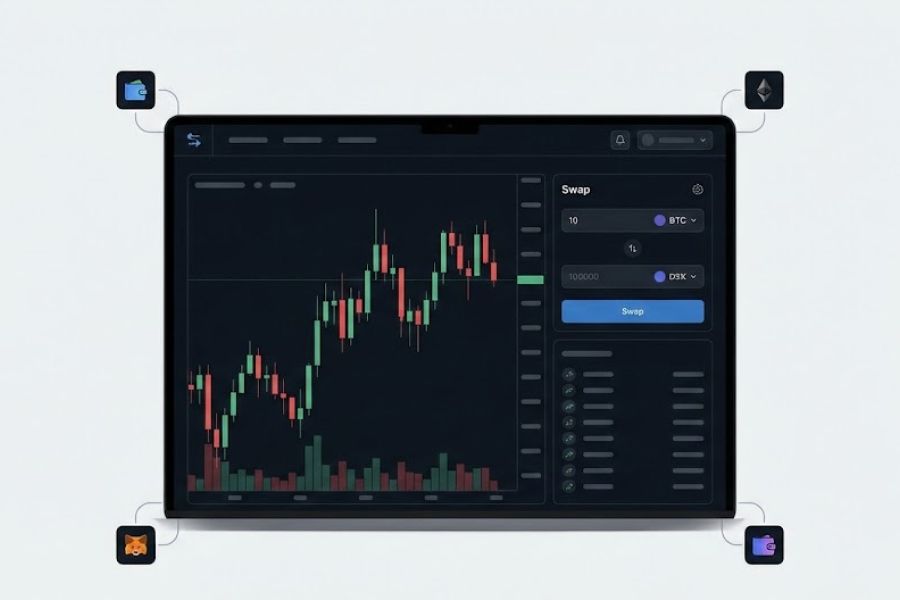
Decentralized exchanges rely heavily on automated market maker systems to function. A DEX automated market maker allows users to keep total control of their funds without trusting a centralized entity. Every transaction is recorded and executed on the blockchain. Let us look at GIDEX here. The GINOX decentralized exchange is built as a native, fully decentralized trading platform built on Omni chain architecture. This system enables fast and secure token swaps without any KYC requirements. The Omni chain based trading engine in GIDEX ensures users experience top-tier security. No middleman holds your capital on this decentralized exchange. This feature offers massive freedom. Users can swap their tokens effortlessly and tap into constant liquidity.
Understanding Automated Market Makers in Crypto
In the cryptocurrency space, understanding the liquidity provision mechanism carries heavy weight. Tokens are locked inside a contract, and their price ratio stays balanced through math algorithms. These formulas guarantee an equilibrium between the two assets in a pool. As supply and demand shift, the token prices adjust automatically. Many traders provide their assets to the platform to earn a return from these fluctuations. This ensures the platform has enough liquidity while rewarding the participants. Grasping this structure is a requirement for active market participation. An automated liquidity protocol makes up a big part of this architecture. Users who understand these processes can secure decent returns. Transparent blockchain data lets anyone monitor the metrics. Nothing is hidden, and everyone can audit the pool status. This transparency solidifies the foundation of the decentralized economy.
automated liquidity protocol

An automated liquidity protocol is an environment where individuals can deposit their assets to facilitate others' trades. These protocols automatically distribute trading fees among the liquidity providers. This approach encourages more people to supply capital to the pools. The structure of these protocols requires no human management. Everything runs on programming code. If a pool faces a liquidity shortage, the pricing formula acts to boost the incentive for new asset deposits. This self-regulating mechanism guarantees system stability. Understanding what is an automated market maker ties directly to knowing these protocols. The more people participate, the more stable the platform becomes. Liquidity systems are built to maintain their performance even during harsh market volatility. This resilience benefits all network members.
Why Automated Market Makers Exist
Before this framework appeared, exchanges struggled with liquidity issues. In traditional order books, if no buyer existed for an asset, the seller could not execute the trade. The new systems were built to fix this problem. They created a permanent liquidity pool, making it possible to trade at any given moment. Another reason these systems exist is to cut out the middlemen and lower trading costs. Users interact directly with contracts, eliminating the need for brokerage firms. Cryptocurrency businesses benefit the most from this high speed.
| Feature | Automated Market Maker | Traditional Order Book |
|---|---|---|
| Human Intermediary | None | Regulated by central entity |
| Pricing Mechanism | Mathematical formula | Buyer and seller bids |
| Availability | Always ready for trades | Depends on user presence |
This table clearly shows how modern systems bypassed old barriers. On a DEX automated market maker platform, the user faces no delays. Transaction speeds are very high, and you do not need to find a counterparty to trade. This financial freedom has massive appeal for traders.
How Automated Market Makers Work

To find the answer to how automated market makers work, we have to look at the math formulas. The most famous equation here is the constant product formula. In this model, multiplying the amount of the first token by the second token must always equal a constant number. When a user buys some of the first token, its supply in the pool drops, and its price rises to keep the product constant. This simple mechanism adjusts prices based on the pool's inventory. The larger the trade, the bigger its impact on the price. The system needs no outside intervention and runs entirely on the blockchain code. Taking a close look at how automated market makers work shows you exactly why these systems are so popular. Math drives the entire process. This math is transparent and verifiable, minimizing the chances of price manipulation.
The Role of AMMs in DeFi
Decentralized finance would not have grown without these tools. AMM platforms provide the required infrastructure for asset swapping. They allow new projects to bootstrap their initial liquidity without paying massive listing fees to centralized exchanges. Composability in these systems means different platforms can plug into each other's liquidity. An Omni chain liquidity and settlement layer is a prime example of these advancements, allowing data and asset exchange across various networks. The presence of these tools in the modern economy is massive. An automated liquidity protocol can supply liquidity to dozens of platforms at once. People are always hunting for the best pools to park their assets. This dynamic creates healthy competition among platforms. Each platform tries to offer better yields to attract more liquidity.
automated market maker crypto
The automated market maker crypto sector includes platforms and tokens that drive the economics of these systems. Governance tokens allow individuals to participate in network decisions. Changing fees or adding new pools happens through voting by the holders of these tokens. Many platforms distribute their native tokens as rewards to liquidity providers to attract more capital. These incentives cause rapid liquidity growth in the pools. Users can move their assets to the most profitable sectors by tracking the yield of different pools. A powerful system can handle thousands of transactions per second. That is why so many people flock to this space. Knowing what is an automated market maker helps you measure the true value of these tokens. The tokenomics are designed correctly to keep the network stable.
Risks and Limitations of AMMs
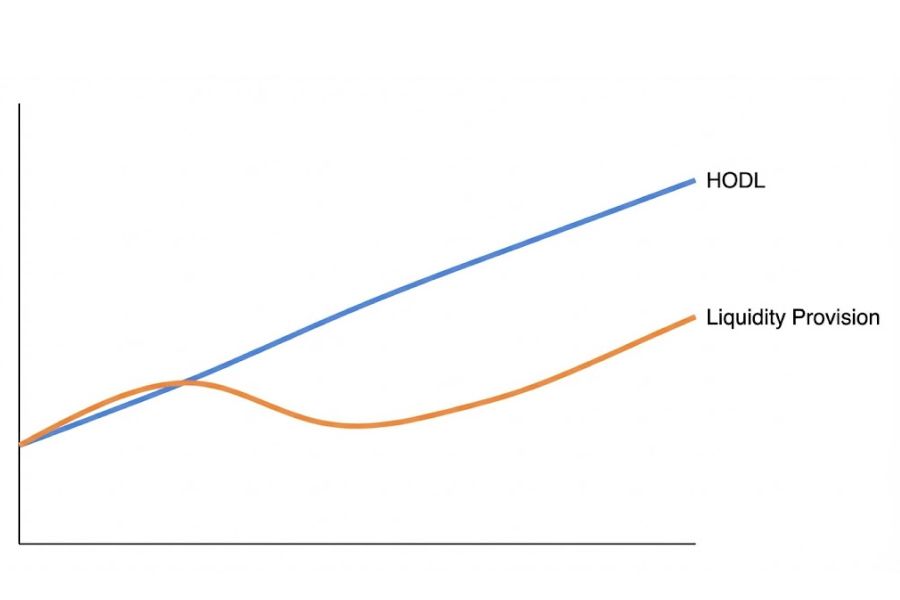
Every financial framework carries its own problems. One of the risks on these platforms is price slippage. When a trade size is large compared to the pool's liquidity, the person receives the asset at a worse rate than expected. Another issue relates to smart contract security. Any bug in the code can lead to the loss of pool funds. Sudden market shifts can also impact people's assets. When a token's price swings violently, liquidity providers might see the value of their initial capital drop. This requires solid risk management and constant market monitoring. Familiarity with AMM risks is a vital part of the trading journey. Jumping into this space without knowing these hazards makes no sense. Auditing the code and tracking historical performance lowers the risk.
AMM risks
Impermanent loss stands out as one of the most notable AMM risks. This happens when the price of the assets at the time of withdrawal changes compared to the time of deposit. In this case, the user would have made more profit just holding the assets in their wallet instead of putting them in the pool. This loss only becomes realized once the person withdraws their capital from the pool. Other hazards exist on this path too.
| Risk Type | Potential Issue | Mitigation Strategy |
|---|---|---|
| Impermanent Loss | Token value change in the pool | Pick stable pools |
| Price Slippage | Order execution at a bad rate | Split large orders |
| Coding Bugs | Smart contract exploit | Use reputable platforms |
Recognizing these AMM risks helps you set better strategies. You always have to take on some risk to make a profit. Checking the platform's history and its total value locked acts as a good metric to gauge its reliability.
Benefits of Using Automated Market Makers
Utilizing these tools brings massive advantages to individuals. Open access to financial markets is one of them. Anyone with a digital wallet can operate in these systems without identity verification. This feature is highly beneficial for users who lack access to international banking services. Earning a continuous passive income is another benefit. You get a cut of the transaction fees by funding the pools. Total operational transparency and the ability to view all transactions on the blockchain boost people's trust and prevent central entities from manipulating prices. These benefits have caused continuous growth in DEX automated market maker systems. They are grabbing a larger market share in the economy over time. As these platforms upgrade, the fees go down too.
Final Thoughts
We covered what is an automated market maker and dissected how these systems operate. We saw how blockchain contracts replaced traditional setups and provided steady market liquidity. Knowing the AMM risks and the benefits of this space is required for sustained activity in financial markets. We broke down core concepts like how automated market makers work in plain terms.
GINOX, as a reliable hub and the first AI-driven and Web3 Smart Suite in financial markets, always strives to provide users with the most accurate data. We appreciate your time with us at GINOX.
Frequently Asked Questions
- What is an automated market maker in simple terms?
In simple terms, an automated market maker is a system letting you trade digital currencies without a counterparty. It uses capital pools and math formulas to do this. The whole process runs automatically on the blockchain.
- How does an AMM determine token prices?
These systems use a constant equation to set the price. The most famous formula states that the first token's inventory multiplied by the second's must always stay constant. When you buy one, its supply drops and its price goes up.
- What is impermanent loss in AMMs?
This is a temporary loss happening when your asset's price in the pool changes compared to your deposit time. You can use INTELLIGENT X to pick suitable pools. This AI-powered signal analyzer evaluates signal validity and market sentiment surrounding the assets.
- How are AMMs different from order-book exchanges?
In traditional exchanges, buyers and sellers must agree on a price. In an automated market maker system, you trade against a software contract that offers you a price based on the pool's inventory and is always ready to transact.
- Are automated market makers safe to use?
These systems are fundamentally secure because their code is transparent. To get higher security in your trades, you can use GIDEX. This exchange is a native, fully decentralized trading platform built on Omni chain architecture, giving you total asset control.