Category: Crypto
What Are Smart Contracts on Blockchain? Explained Simply
· 5 MIN READ
Learn what smart contracts are, how they work on blockchain, their use cases, benefits, risks, and why they matter in crypto.
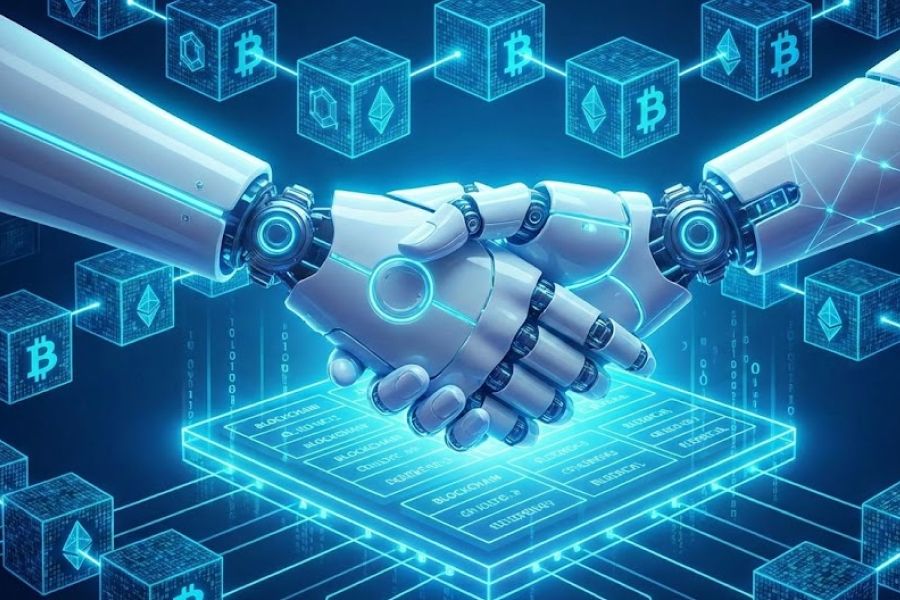
Smart Contracts on Blockchain
Automated agreements are software tools designed to execute terms without human intervention. Many users naturally wonder how they can trust lines of code with their assets. The answer is straightforward: these agreements reside on a distributed network, meaning no single entity can tamper with them. You no longer need traditional banking systems to handle financial tasks when agreements trigger automatically upon meeting specific conditions. GINOX, as the first AI and Web3-based Smart Suite in financial markets, utilizes this secure architecture to provide its services. In this article, we examine how this system replaces outdated administrative methods.
What Are Smart Contracts on Blockchain?
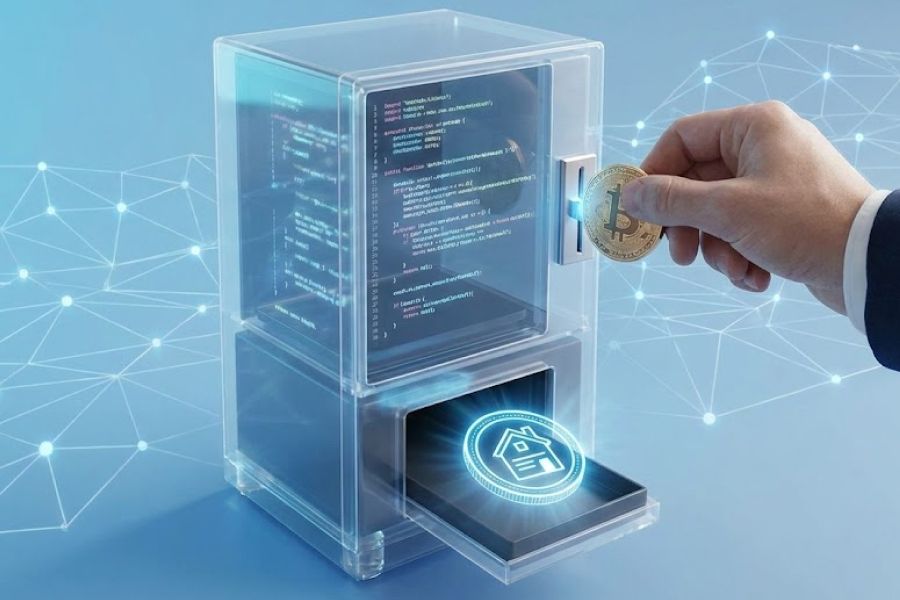
To answer the common question of what is a smart contract, we must look back at the original concept from 1994. The creator of this idea compared these agreements to automated vending machines. You insert the money, press the button, and receive your item. There is no cashier involved in the transaction. These codes follow clear rules and operate entirely on a distributed network.
In practice, smart contracts on blockchain are programs that run specific commands once predetermined conditions are met. This structure allows individuals to trade and collaborate without needing prior trust or mutual acquaintance. The entire process takes place within decentralized networks. The recorded data is fully traceable, and reversing or altering the transactions is practically impossible. Businesses can adopt this infrastructure to streamline their operations efficiently.
Understanding Smart Contracts in Blockchain

When analyzing blockchain smart contracts, we need to observe their operational mechanics. Developers typically build these programs using languages like Solidity on the Ethereum network. To execute these software functions, users pay a processing fee. Network validators then process the commands and confirm their accuracy.
When two parties register an agreement, the system operates on conditional logic. If the primary condition is met, the secondary outcome triggers. This approach eliminates any ambiguity in executing the agreement. The process remains highly transparent, as all network participants hold a copy of the contract in their local ledgers. This method is highly prevalent in decentralized finance. By utilizing this technology, distributed networks have successfully removed human intermediaries and accelerated task execution.
| Core Components | System Application |
|---|---|
| Data Variables | Storing information and numerical values |
| Execution Functions | Carrying out programmed commands |
Why Smart Contracts Are Important
The continuous development of smart contract technology enables legacy processes to function at a much higher speed. Removing intermediaries directly translates to lower operational costs. In standard legal and banking systems, you often pay substantial fees for document verification. Software-based systems drastically reduce these expenses.
The execution accuracy is notably high. The machine and the code make the decisions, preventing human error during data entry. Once registered, these documents become immutable. Neither party can unilaterally alter the terms of the agreement. For various businesses, this level of transparency is highly beneficial. Companies can automatically schedule and issue financial payments and employee salaries without manual processing.
Smart Contracts in DeFi and Web3
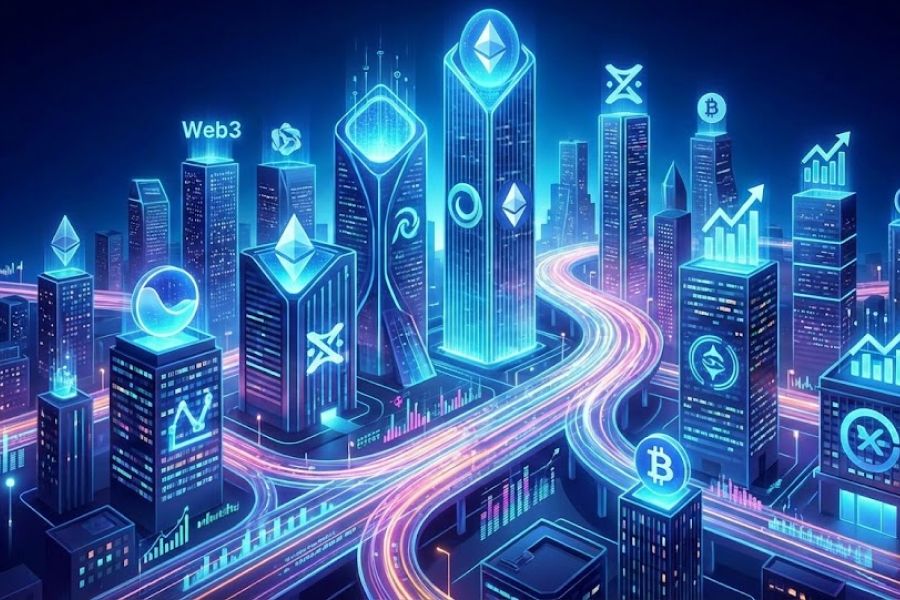
The concept of smart contracts in crypto ties directly to decentralized financial platforms. These codes form the foundation of decentralized exchanges and lending protocols. Users lock their assets in liquidity pools, and the system automatically calculates and distributes their yields.
The GIDEX decentralized exchange serves as a prime example of this structure. This platform is a native, fully decentralized trading platform built on Omni chain architecture. An Omni chain based trading engine and an Omni chain liquidity and settlement layer allow users to swap assets seamlessly without requiring KYC verification. No third party ever gains access to your wallet. The platform supports both spot and futures trading, handling all processes with maximum security.
Benefits and Limitations of Smart Contracts
The primary advantages of these codes include high execution speed, strong security, and operational independence. You do not need to hire a lawyer or visit a notary public. Your documents are encrypted on a distributed ledger, keeping them safe from unauthorized access. The workflow moves significantly faster than standard bureaucratic procedures.
Certain limitations exist alongside these benefits. These systems cannot process qualitative concepts; developers must define everything using numerical values. If a developer writes faulty code, correcting it after network deployment is impossible. This specific issue has led to financial losses in several past projects. Furthermore, connecting these programs to physical entities still requires hardware intermediaries, meaning real-world shipping still relies on human action.
Security Risks and Challenges

Regarding security, digital agreements are not entirely flawless. Programming errors can open pathways for malicious actors to exploit the system. These vulnerabilities highlight why thorough evaluation is necessary before deploying any code to the main network.
To minimize trading risks and verify market signals, the GINOX ecosystem developed the INTELLIGENT X tool. This product functions as an AI Signal Analyzer. It thoroughly reviews and validates all incoming signals on the platform. The system estimates the risk level, market alignment, and the expected duration to reach the target price. By utilizing this software, individuals can make trading decisions with higher confidence and avoid potential market hazards.
The Future of Smart Contracts
The future of these structures looks even brighter when integrated with artificial intelligence. Automated codes are currently entering sectors like real estate, supply chain logistics, and healthcare. Combining this technology with the Internet of Things allows physical devices to conduct transactions with one another without human input.
Ecosystems are actively unifying their services to keep pace with these changes. The GINOX AI platform acts as the ecosystem's artificial intelligence hub, bringing together various large language models like Claude and Gemini into a single user interface. This independent system can execute complex, multi-step commands. The fusion of AI and the third generation of the web paves the way for superior systems. Tomorrow's financial markets will undoubtedly rely on these automated foundations.
| Features | Market Impact |
|---|---|
| Automation | Accelerated task execution |
| Advanced Cryptography | Fraud prevention |
| Data Integrity | High-level transparency |
The Evolution of Smart Contracts
The evolutionary path of this technology began in the 1990s. Long before Bitcoin emerged, researchers sought a viable method for executing digital agreements. These ideas remained theoretical for years. With the introduction of the Ethereum network, these programs finally found a practical execution environment. Programmers successfully deployed their codes onto this network. This breakthrough triggered a new wave of decentralized platforms. Today, we observe thousands of applications running entirely on these agreements without any centralized server. This evolution clearly reflects the market's demand for trustless platforms.
Practical Applications of Smart Contracts
The practical applications of this system are vast. One of the most straightforward use cases is securing a transaction between a buyer and a seller. A manufacturer requiring raw materials can set up a conditional payment. The supplier ships the goods, and the system automatically transfers the funds the moment it receives the shipping confirmation. Real estate trading, voting systems, customs tracking, and insurance payouts are other prominent applications. All these tasks execute through network verification, entirely bypassing clerical staff. This versatility encourages major corporations to transition toward this architecture.
Decentralization
Decentralization remains the defining characteristic of these systems. It refers to the complete absence of a central authority controlling the network. In older models, governments or banks hold the responsibility of storing data and approving transactions. A decentralized system operates without a core hub. A global group of independent computers takes on the task of verifying actions. This structural design makes the system highly resistant to cyber attacks; taking the network offline would require shutting down every connected computer simultaneously. This setup prevents server outages and guarantees high stability.
Smart Contracts and The Law
How these codes interact with legal frameworks is still under review in many jurisdictions. Developers designed these systems to function independently of the justice system. However, if an execution error occurs, seeking legal recourse becomes necessary. Certain states and regions have updated their laws to officially recognize blockchain-based exchanges. Electronic signatures now carry the exact legal weight as paper documents. Lawmakers are actively working to establish a framework for handling faulty code disputes. Aligning software programming with legal text will be a major discussion point in the coming years.
Final Thoughts
Distributed agreements have fundamentally altered how businesses operate. By eliminating intermediaries, these computer codes deliver both speed and transparency. Reviewing the benefits of this system shows exactly how the blockchain network secures agreements. Tools like decentralized exchanges and market analyzers indicate that the economy is heading toward a fully automated environment. Despite certain security risks, the growth trajectory of these systems will not slow down. Individuals and companies should familiarize themselves with this technology to leverage its advantages in their daily operations.
Frequently Asked Questions
- What is a smart contract in simple terms?
In basic terms, it is a code that executes an agreement between two parties without requiring a third party. Once the required conditions are met, the network processes the transaction automatically without any human oversight.
- How do smart contracts work on a blockchain?
These programs reside on a distributed network. After condition verification, the codes broadcast across the system. Network computers verify the transaction and record it in a new block, making it completely unalterable.
- Are smart contracts legally binding?
In some jurisdictions, these agreements hold legal weight. Laws regarding electronic signatures grant these codes legal validity, though these regulations vary widely by country and are still evolving.
- What are smart contracts used for?
They are actively used in decentralized finance, exchanges, supply chain management, and document registration. Automated crypto transactions and token issuances all happen through these programs.
- Are smart contracts safe to use?
Their safety depends heavily on the quality of the code. The network itself is secure, but a bug in the program can be hazardous. For individuals who lack trading knowledge, the GINOX CORE APP is an excellent entry point. It functions as a digital mining system for tokens where users, even without initial capital, can activate a miner, earn referral rewards, and interact with the ecosystem without needing to trade directly.
GINOX is the leading website for the first AI and Web3-based Smart Suite in financial markets.